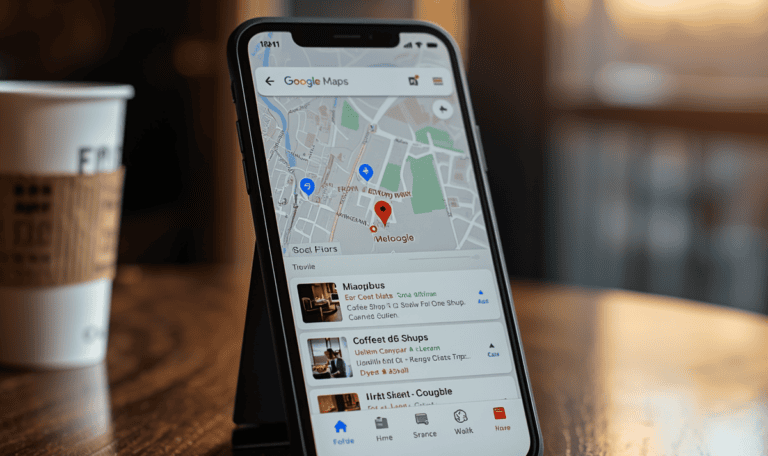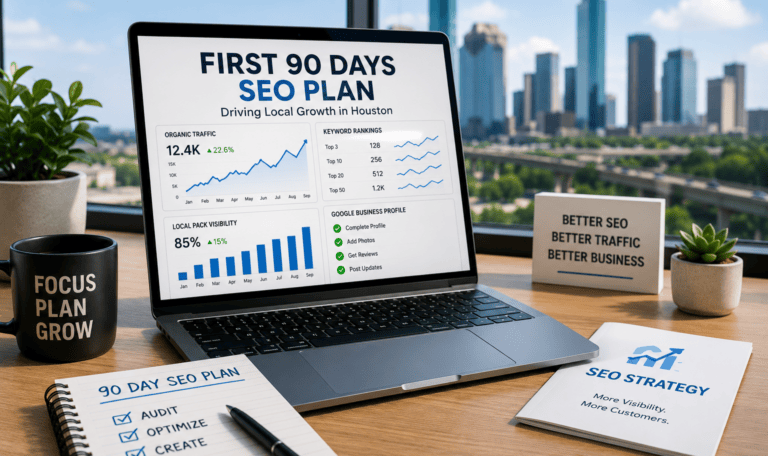
A Houston owner can search for a service, see three competitors in the map pack, and wonder why their company is nowhere in sight even though the website looks better. Understanding Why Some Houston Businesses Rank on Google Maps and Others Don’t starts with knowing that Google judges far more than a homepage, including business information, proximity, profile quality, and trust signals across the web. This guide explains how Google Maps visibility actually works, where Houston companies usually lose ground, and what to fix first. If you’d rather have someone run the profile for you, our Google Business Profile management service does all of this monthly. What “Ranking on Google Maps” Really Means Ranking on Google Maps does not mean one single position across all of Google. It can refer to the map pack in the main SERP, the full Google Maps app or browser results, or local organic listings below the map, and each surface uses overlapping but not identical signals. For most Houston businesses, being outside the top three feels like not ranking at all because click-through rates drop sharply after the visible map pack. A company sitting at positions four through ten may technically appear in Google Maps, yet it receives a fraction of the calls, direction requests, and site visits captured by the top three. That gap matters because owners often misdiagnose the problem. They assume they are invisible when the real issue is low visibility on the highest-attention placements, which changes the strategy from “get listed” to “earn top-three relevance and trust.” Map Pack vs. Google Maps vs. Local Organic Houston Google Maps rankings depend on more than just having a website. The map pack appears in Google search results, while the full Google Maps interface displays a larger set of local businesses. Local organic results are traditional website listings influenced by local intent. Google Business Profile insights can show how users discover and interact with a listing. However, those numbers make more sense when you separate which search surface generated the action. Google explains local ranking concepts on support.google.com. The main takeaway is simple. A strong website can improve local organic visibility, while a weak Google Business Profile can still hurt map pack performance. Many Houston businesses underperform because they treat Maps and website SEO as completely separate strategies. Why Rankings Look Different for Every Searcher Google recalculates local results based on proximity, device, search history, and wording, so two people in Houston can search the same phrase and see different businesses. A user in The Heights searching “coffee shop” sends a different local intent signal than someone in Sugar Land using the same words. Incognito mode removes some personalization, but it does not erase location context or fully simulate a neutral market test. Better tracking comes from grid-based local rank tools, Google Business Profile insights, and real conversion data instead of one manual search from one phone. Google’s Local Ranking Factors: Relevance, Distance, and Prominence Google publicly explains local ranking factors through relevance, distance, and prominence. That framework still explains most Houston Google Maps rankings today. Many businesses struggle because they overinvest in one area, usually website SEO or reviews, while ignoring how distance affects local visibility. Distance is especially important in a large city like Houston. A business may be highly relevant and well reviewed, yet still lose visibility across town because Google prioritizes convenience and local proximity. Prominence acts as the balancing factor. Reviews, citations, links, and brand recognition help Google determine whether a business is trusted enough to earn visibility when proximity alone does not decide the outcome. Relevance: Matching the Query to Your Business Relevance starts with whether your listing actually matches what the searcher wants. If a company chooses “air conditioning contractor” but users mostly search “HVAC repair,” Google may see a weaker fit unless the category, services, and profile content reinforce that intent. Services, products, and attributes help Google understand specialization without resorting to keyword stuffing. The smartest Houston profiles use precise service language that mirrors real demand, which is one reason category strategy often moves rankings faster than cosmetic profile edits. Distance: Why You Can’t “Dominate All of Houston” Distance decay means visibility weakens as the searcher gets farther from the business, and city limits do not override that pattern. A company near Memorial may rank strongly nearby and disappear for searches originating in Clear Lake, even if both locations are technically in Greater Houston. That is why realistic local SEO plans focus on neighborhoods, corridors, and service clusters instead of vague citywide promises. Businesses that want to improve google local ranking performance need to define where they can credibly compete, not where they wish to appear. Prominence: The Local Signals Most Businesses Underestimate Prominence combines review quality, brand mentions, citations, links, and offline reputation into a trust profile Google can evaluate. Businesses with strong local press, active reviews, and consistent directory mentions often perform better in Houston Google Maps rankings than quieter competitors offering similar services. Prominence can sometimes overcome proximity disadvantages, but not everywhere. In Houston, it works best inside a realistic service radius instead of as a way to bypass geography completely. Google Business Profile Setup Problems That Hold Houston Companies Back Many Houston companies lose Maps visibility because their Google Business Profile sends mixed signals before Google even evaluates the website. Small setup errors can suppress relevance, reduce trust, and create ranking volatility that no amount of content marketing can fully offset. A common pattern is a profile that was claimed years ago, lightly filled out, and never reviewed again. Google rewards operational accuracy, so stale profiles often stagnate while more disciplined competitors gain ground. Primary Category and Secondary Categories The primary category is one of the strongest relevance signals in local search. If the category does not match the core query, even a profile with many reviews can underperform a competitor whose category is better aligned. Secondary categories help define breadth, but they should support the real offer instead of chasing every..