Tag: local seo

How to Choose the Right Primary Category for Your Google Business Profile

Ask a business owner how long they spent writing their profile description and you’ll usually hear something like an hour. Ask how long they spent choosing their Google Business Profile category and the answer is closer to four seconds. That’s backwards, and it’s expensive. The description does almost nothing for your rankings. The category decides which searches you’re allowed to compete in at all. So if a competitor two miles further away keeps outranking you for your main service, this is one of the first places to look. What your Google Business Profile category actually does Think of the category as a filter rather than a label. Somebody searches “emergency plumber near me.” Google is not reading every business description in the area to work out who sounds most plumber-ish. It pulls a pool of businesses whose categories say they do that work, then sorts that pool by relevance, distance, and prominence. Miss the pool and the rest of your profile is irrelevant for that search. You get one primary category and up to nine additional ones. The primary carries far more weight than the others. It’s your answer to the question “what is this business, in three words or less,” and everything else on the profile (services, description, photos, posts) exists to back that answer up. This is why category work belongs near the front of a real local SEO audit instead of buried in an appendix. There are two knock-on effects that catch people out. The first is that your category controls which features Google gives you. Restaurants get menus and reservations. Service businesses get a services module for listing individual offerings. Hotels get a completely different profile layout. Land on a category that’s close but not quite right and you can lose access to tools your competitors are using. The second is attributes. Those checkboxes on your profile for things like wheelchair access, online estimates, or veteran-owned status are tied to category. Several of them double as filters inside Google Maps, so a mismatched category can leave you out of filtered results without anyone telling you. Why adding more categories doesn’t fix a bad primary Whenever I open a profile with all nine additional slots filled in, I already know what I’m going to find. The primary is wrong, and somebody tried to make up for it in volume. Additional categories help you surface for secondary services. They will not rescue a bad primary. Take a general contractor whose primary is “Construction Company” but whose revenue is mostly kitchen remodels. Adding “Kitchen Remodeler” in slot six doesn’t move them into the remodeling pool. They’re still competing as a construction company. Google says this fairly directly: use a few categories to describe the business, not one for every product or service. There’s a companion rule that gets ignored constantly, which is that you don’t need the broad parent category once you’ve picked a specific one. If your primary is “Italian Restaurant,” tacking on “Restaurant” underneath does nothing. The broader searches already include you. Padding the list carries a cost too. Categories you don’t actually serve create a gap between what your profile claims and what your site, reviews, and service pages can support. In competitive verticals that gap is what gets profiles reported and occasionally suspended under Google’s representation guidelines. Fighting your way back from a suspension is a much worse week than ranking on page two. Simple test: if you wouldn’t build a page on your website for it, it shouldn’t be a category. How to pick the right one Here’s the process I’d use instead of guessing from the dropdown. Start with revenue, not identity The question isn’t “what am I,” it’s “what service pays the bills, and what would a stranger type to find it?” A law firm’s identity is “law firm.” If the revenue is personal injury work, the primary category is “Personal Injury Attorney.” Write down the searches you want to win Three to five is plenty. Skip branded searches. You want the ones from people who don’t know you exist yet: “AC repair Houston,” “emergency dentist near me,” “commercial roofing contractor.” That list is what you’re about to test the category against. Check what the map pack winners are using Run those searches and look at who’s sitting in the top three. This step takes ten minutes and hardly anyone does it. Open each result and check what primary category it uses. Google is telling you outright which category it associates with that query. The data sits in the page source of the Maps listing, and there are browser extensions that pull it out for you if you don’t want to read HTML. When all three top results share a primary category and yours is different, you’ve found your problem. Go back and look for something more specific The category list is fixed. You choose from what Google offers and you can’t invent your own, but the list runs into the thousands, so read past the first suggestion. Google’s own worked example is picking “Nail Salon” over the generic “Salon.” Specific usually wins. The exception is worth knowing. If the specific category is so narrow that it doesn’t describe most of your work, you’ll cut yourself out of searches you should be winning. A shop that does general auto repair and occasionally rebuilds a transmission is not a “Transmission Shop.” Mistakes that come up again and again Choosing what sounds most impressive “Marketing Agency” feels bigger than “Internet Marketing Service.” Only one of them matches what people search. Borrowing your industry association’s vocabulary The words your trade group uses and the words your customers type are often nowhere near each other, and Google’s list follows the customer. Setting it once and never looking again Google adds, renames, and retires categories on its own schedule. When a category is retired, affected profiles get shifted to something broader, and no email arrives to warn you. If your service mix has changed in the last couple of years, or you’ve never..

Why Your Business Isn’t Showing Up in Houston’s Map Pack (And How to Fix It)

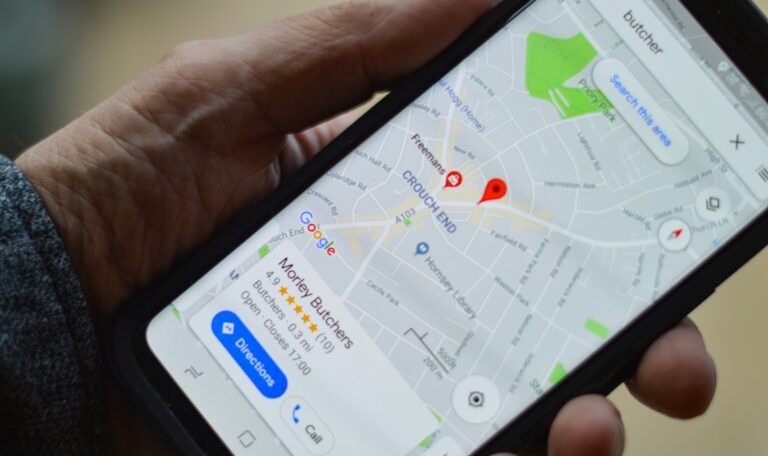
You’ve done the thing where you pull out your phone, type in your own service plus “Houston,” and scroll down to that little box with the map and three businesses in it. And you’re not in it. Three competitors are. One of them you’ve never even heard of. That box is the Houston Map Pack, and for a lot of local businesses it’s where the actual money is. Not page one of the blue links. That box. It sits above almost everything else, it has your phone number in it, and people tap it without ever visiting a website. So why isn’t your business there? Usually it’s one of about seven things, and none of them are mysterious. Let’s go through them. What the Houston Map Pack Is Actually Ranking Before you can fix it you have to know what you’re being graded on. Google is unusually blunt about this. Their own documentation on improving your local ranking says local results are based on three things: relevance, distance, and prominence. Relevance is how well your business matches what someone typed. Distance is how far you are from wherever that person is standing. Prominence is how well-known and well-referenced your business is across the web. Here’s what nobody tells you: in a city like Houston, distance carries enormous weight. We’re spread across roughly 665 square miles. A search from Clear Lake and a search from Cypress are effectively two different markets. If you’re chasing “Houston” as one flat term, you’re competing in dozens of local markets at once and probably losing most of them. Reason 1: You’re Too Far From the Person Searching This is the most common one, and the most misunderstood. There’s an old myth that Google favors businesses near the geographic center of a city. It doesn’t. It favors businesses near the searcher. Someone standing in Katy searching “AC repair near me” is getting Katy results, not downtown results, no matter how good your downtown profile is. If your shop is off Highway 6 and you’re wondering why you don’t rank for searches happening inside the Loop, that’s why. You’re 22 miles away. What to do about it: Stop measuring success by whether you rank for “Houston [your service].” Start measuring by whether you rank in the neighborhoods where your customers actually are. Build real pages for the areas you serve — The Heights, Sugar Land, Pearland, Spring, Bellaire — with content that’s genuinely about serving customers there. Not the same page copied eight times with the city name swapped. Google spots that instantly, and so do customers. If you’re a service-area business without a storefront, set your service area honestly and let your website and content do the geographic heavy lifting. We break this down further in our guide to how local SEO actually works for Houston businesses. Reason 2: Your Primary Category Is Wrong Your primary category on your Google Business Profile is one of the strongest levers you’ve got, and a shocking number of businesses have it set wrong. The test Google’s guidelines push you toward is simple: your category should complete the sentence “this business is a…” — not “this business has…” or “this business does…” A roofing company listed as “General Contractor” is going to struggle against roofing companies listed as “Roofing Contractor.” A med spa listed as “Spa” is competing with nail salons instead of the businesses it actually competes with. Same logic across the board. What to do about it: Go look at the three businesses currently sitting in the Map Pack for your target search. Find out what primary category they’re using. Then compare it to yours. If there’s a mismatch, that’s likely your single biggest fix, and it takes four minutes. Add secondary categories too, but keep them relevant. Stuffing in ten loosely related categories dilutes you and can trip Google’s guidelines for representing your business. The local SEO community at Sterling Sky has done a lot of good public work on how these guidelines get enforced in practice — worth a read if you want to go deeper. Reason 3: Your Name, Address, and Phone Number Don’t Match Across the Web This one’s boring and it costs businesses rankings constantly. You moved offices in 2022 and never updated Yelp. Your old suite number is still on your Facebook page. Your website footer says “Ste. 200” and your Google profile says “Suite 200.” You ran a Google Ads campaign and a call tracking number ended up on three directories. Google is trying to confirm you’re a real, stable, verifiable business. Every conflicting record makes that job harder, and uncertainty doesn’t help you win the Map Pack. What to do about it: Pick one exact format for your name, address, and phone number. Write it down. Then go clean up the major directories — Yelp, Bing Places, Apple Maps, Facebook, Angi, BBB, and whatever industry-specific ones matter in your vertical. Consistency matters more than volume here. Fifty clean citations beat three hundred messy ones. This is one of the first things we look at in a real local SEO audit, because it’s so often the quiet reason a business is stuck. Reason 4: Your Reviews Went Quiet Review count matters. Review velocity matters more than people realize. A Houston business with 180 reviews, 170 of which came in before 2021, looks stale next to a competitor pulling in six or seven a month. Google is looking for signs of ongoing, active, real-world business. A dead review profile is a signal, just not the one you want. Ratings matter, recency matters, and whether you respond matters. Copy-pasted “Thank you for your feedback!” replies on forty reviews in a row read exactly like what they are. What to do about it: Build an actual system for asking. Not a guilt trip, not a bribe — a system. Send the request while the job is fresh, make the link one tap, and ask consistently instead of in panicked bursts when rankings dip. We wrote a full playbook on getting more Google reviews without begging for them. Reason..

How to Get More Google Reviews Without Begging or Buying Them

It happens to Houston business owners all the time. You deliver great work, the customer tells you how happy they are, and then… nothing. No review. They meant to, probably. Life got in the way. If you want to get more Google reviews, the fix isn’t working harder — it’s asking smarter. If you’re researching how to get more Google reviews in Houston (without begging or buying them), the honest answer is simpler than most guides make it sound: ask at the right moment, remove every unnecessary step, and stay inside Google’s review policies. That’s it. Legitimate reviews build customer trust and support your local SEO, while incentivized or manufactured reviews put your entire Business Profile at risk. Here’s the full process — how to request, manage, and actually learn from reviews without pressuring anyone or faking anything. Start With a Timely Text Request Ask for a review right after a genuine moment of satisfaction: the job’s done, the customer just complimented you, or you fixed their problem. Wait a week and the details fade — and so does your response rate. Review link: A direct URL that opens the Google review box for your business, so the customer doesn’t have to hunt down your profile through local search. You can create this link from your verified Google Business Profile — look for the option to ask for reviews or share the review form. Then test it while signed out of your business account. A broken link or wrong location will quietly kill every request you send by text, email, invoice, or QR code, and you’ll never know why nobody’s responding. Text Scripts to Copy A Houston contractor can send this after the customer signs off on a job: Hi [First Name], thank you for trusting us with your project. If you’re happy with the completed work, would you mind sharing your honest feedback on Google? It takes about a minute: [review link] A restaurant can send this after a confirmed visit: Thanks for dining with us today! If you enjoyed your visit, we’d appreciate an honest Google review: [review link]. Your feedback helps our small team. Keep it short, keep it personal, and send it from a number the customer recognizes. And notice the wording: ask for an honest review, not a five-star one. Requesting a specific rating distorts the feedback and starts to look like fake engagement — which Google explicitly prohibits. Bilingual Requests for Spanish-Speaking Customers Use whichever language the customer used during the transaction. Don’t guess based on a name or appearance. Good bilingual communication respects the customer and makes your text or email follow-up easier to act on. Hola [Nombre], gracias por elegirnos. Si quedó satisfecho/a con su experiencia, ¿podría dejarnos una reseña honesta en Google? Solo toma un minuto: [review link] If you send a bilingual message, put the language the customer already used first and the other version below it. That keeps the request relevant without making either language feel like an afterthought. Action for today: Create your review link, text it to yourself, and confirm it opens the correct Google review form. Reply to Every Existing Review Replies don’t generate new ratings directly, but they prove a real person reads the feedback. Prospective customers who see thoughtful responses are more likely to believe their own comments will matter — and more likely to leave one. Thank positive reviewers and mention something specific they said, like the punctual service or the clear estimate. Skip the copy-paste replies; identical responses make even legitimate reputation management look automated. For criticism: stay calm, acknowledge the concern, and take the transaction-specific conversation to phone or email. Arguing in public rarely wins over the reviewer, but a measured response tells every future reader how you handle problems. Reply Templates That Sound Human For a positive review: Thank you, [Name]. We’re glad you had a great experience with [specific service]. We appreciate you taking the time to share this. For a negative review: Thank you for bringing this to our attention. We’re sorry your experience fell short. Please contact us at [phone or email] so we can learn more and work toward a resolution. Use the reviewer’s first name only when it’s publicly visible. Never blame the customer, reveal account details, or offer compensation publicly — any of those creates privacy and credibility problems bigger than the original complaint. Privacy-Sensitive Businesses Need Extra Care A Houston med spa shouldn’t confirm treatments, appointments, health information, or even that a customer relationship exists — unless the reviewer already disclosed those details and a response is still appropriate. HIPAA obligations can apply even when the reviewer voluntarily discusses their visit. A safer request looks like this: Thank you for visiting us. If you’d like to share general feedback about your experience, we welcome an honest Google review here: [review link]. Please do not include personal medical details. Privacy-sensitive businesses should also use secure, consent-based follow-up rather than exporting patient contact lists into some unapproved marketing tool. Convenient automation doesn’t override privacy law. Action for today: Reply to your five newest unanswered reviews, using specific but non-private language. Build a Simple Review Request System Occasional requests depend on someone remembering. A defined workflow makes them consistent. Tie each request to a measurable milestone — a paid invoice, completed delivery, finished repair, or resolved support case. Assign one employee to own the process, pick one channel to start, and record whether each request went out. Don’t monitor or pressure customers to respond. And resist the urge to buy complicated software your staff won’t use; start with one trigger. Review velocity: The steady pace at which a business receives new reviews over time. Natural velocity reflects real customer activity, and it looks more credible than an unexplained surge. That matters because a sudden mass campaign tends to produce repetitive reviews or odd account patterns — exactly what Google’s filters are trained to catch. Use a Three-Step Follow-Up Workflow The initial email: Hi [First Name], thank you again for choosing [Business Name]. Your honest feedback helps other customers..

How to Get More Calls From Your Houston Google Business Profile

If your phone isn’t ringing, your Houston Google Business Profile is usually the first place to look. Most local customers never scroll past the map results. They search “AC repair near me” or “taqueria open now,” tap the first trustworthy-looking listing, and call. That whole decision takes about eight seconds. The good news: getting more of those calls doesn’t require a bigger ad budget. It requires a profile that’s complete, active, and easy to call. Here’s exactly how to do it, starting with the fixes that take five minutes. First, Make Sure People Can Call You Before anything else, open your profile at business.google.com and check three things: That last point matters more than most owners realize. A Katy HVAC company we looked at was categorized as “Contractor.” We switched the primary category to “HVAC contractor” and added “Air conditioning repair service” as a secondary. That’s the kind of change that moves a listing from invisible to top three. No new content required. If you’re not sure which categories or settings are hurting you, a quick SEO audit will surface it in one pass. Complete Every Section — Google Rewards Effort Google has said that complete profiles get more clicks and calls. In our experience the gap is dramatic. Businesses with filled-out profiles routinely see multiples of the engagement that half-finished listings get. Work through: A note for service-area businesses: if you work at customers’ homes — plumbers, mobile detailers, landscapers — Google hides your street address. That means your call button carries even more weight, because customers can’t judge you by your storefront. Your photos, reviews, and response speed are your storefront. Reviews Are Your Call Engine Nothing on your profile influences the decision to call more than reviews. BrightLocal’s consumer survey found that the overwhelming majority of people read reviews before choosing a local business. Most won’t consider anything under four stars. Here’s the system that works: Ask at the moment of satisfaction. Right after the job’s done and the customer says thanks — that’s when you ask. Not a week later by email. Get your review link from your profile dashboard — Google gives every business a short share link. Text it on the spot. Reply to every review, good and bad. Replies signal an active business to both Google and searchers. For negative reviews, stay calm, acknowledge the issue, and move it offline. Try: “Sorry we missed the mark — call us at (713) XXX-XXXX and we’ll make it right.” A well-handled bad review builds more trust than ten unanswered five-star ones. Get keywords into reviews naturally. You can’t tell customers what to write, but you can prompt them. Try: “Mentioning what we helped with — like the water heater replacement — helps other Heights homeowners find us.” Reviews that mention your service and neighborhood reinforce what you rank for. Never buy reviews or run review-swap groups. Google’s filters catch these more often than people think. The penalty — review removal or suspension — costs far more than the shortcut saved. Photos and Posts: Proof You’re Real and Active Profiles with recent photos get noticeably more direction requests and calls. Listings running the same five stock images from 2022 don’t. Upload: Then use Google Posts weekly. Posts are free mini-ads that appear right on your listing: offers, updates, seasonal reminders. A Heights taqueria posting its weekend specials every Thursday isn’t just informing regulars. It’s showing Google an active, maintained business. For Houston service companies, seasonal posts practically write themselves. Think “Book your AC tune-up before the June heat” or “Post-freeze pipe inspections — same-week appointments.” Is keeping up with posts and content the bottleneck? That’s exactly what a content marketing program takes off your plate. Turn On Messaging, But Only If You’ll Answer Google lets customers message you directly from your listing. Some people — especially younger customers — will message before they call. Turn it on only if you can respond within a few hours. Google displays your response time publicly, and “usually responds in a few days” repels leads. If you can’t commit, leave it off and keep the focus on calls. Your Website Still Decides Half the Battle Plenty of searchers tap through to your site before calling. If that page loads slowly on a phone, buries the number, or looks abandoned, the call dies there. Three fixes: Don’t Ignore AI Search — It’s Answering Before Google Does Here’s the shift most Houston businesses haven’t caught up to. A growing share of “who should I call” questions never touch the map pack. People ask ChatGPT, Google’s AI Mode, or Perplexity for the “best emergency plumber in Houston.” The answer comes back with two or three names in it. Those AI answers pull heavily from the same signals covered above. Review volume and sentiment, complete profile data, consistent citations, and site content that states what you do and where. A strong Houston Google Business Profile is now the foundation of AI visibility, not just map visibility. Do AI tools mention your business when Houstonians ask? That’s the core of AI SEO. Check where you show up in AI answers, then fix your presence so you do. Track Your Calls So You Know What’s Working Your profile dashboard shows calls, direction requests, and website clicks under Performance. Check it monthly and watch the trend, not the raw number. Houston search volume swings hard with the seasons. AC searches spike in May; pipe-repair searches spike after every freeze. For anything beyond the basics, use a call tracking number as your primary number. List your real number as an additional number. Set up correctly, this preserves NAP consistency. It also tells you exactly which calls came from your profile versus your website or ads. Set up wrong, it fragments your listing data — so if you’re unsure, ask before you flip it on. Quick Checklist: Do These This Week Frequently Asked Questions How long does it take to see more calls from a Houston Google Business Profile? Quick fixes (categories, hours, phone number) can affect visibility within days. Review growth and ranking improvements in a competitive..

Why Your Houston Business Website Isn’t Converting Visitors Into Calls (And What to Fix)

If your site ranks in the top 3 on Google Maps but you still get fewer than five phone calls a week, the problem usually is not SEO. It’s website conversions breaking at the exact moment a Houston searcher is ready to call. At SEO Impact Pros, we’ve audited Houston businesses in competitive categories that looked “fine” on desktop yet quietly lost leads on mobile. The pattern repeats: no visible number above the fold, weak trust signals, and a contact form as the only call-to-action. What “Not Converting” Really Means for Local Search Traffic For most local businesses, “conversion” is not a newsletter signup. It’s a high-intent visitor coming from local search and turning into a call. That traffic often comes from your Google Business Profile, Google Maps, and local organic results on the SERP. These visitors are already shopping with urgency, not browsing. The common mismatch is this: rankings and traffic can be strong while call volume stays low. That’s because visibility is happening, but the page experience is not supporting the decision. Set the right expectation: you don’t need a redesign. You need friction removal and trust building in the first screen, especially on mobile-first design. Traffic vs. Calls: Two Different Problems Traffic is a visibility metric. Calls are a decision metric. A landing page can “earn the click” and still fail at lead generation if the next step feels unclear, risky, or annoying. Local visitors are often ready to contact immediately. Your user flow has to match that behavior, not fight it with extra taps and long forms. Why Houston Searchers Behave Differently Houston search behavior is heavily mobile-first. People search while parked outside a job site, between appointments, or stuck on I-10, and they expect click-to-call to work instantly. High competition also changes how people decide. In areas like Downtown Houston, The Heights, River Oaks, the Energy Corridor, Sugar Land, and The Woodlands, buyers compare fast and trust signals matter more than clever copy. If your site feels even slightly uncertain, they hit back and call the next listing. That’s the hidden cost of being “built to impress” instead of built to convert. The 60-Minute Fix: Three On-Page Changes That Usually Move the Needle If you want quick wins, prioritize the fastest changes that reduce friction for mobile visitors. You’re trying to make calling feel obvious, safe, and immediate. In our audits, three on-page changes consistently fix a website not getting calls — without touching your logo, your theme, or your entire site structure. Make the phone number unmissable and clickable above the fold. Then add trust signals next to the CTA so users feel confident calling. Fix #1: Put a Tap-to-Call Phone Number Above the Fold (Mobile First) If someone has to scroll or open a menu to find your number, you’re losing ready-to-call leads. On mobile, the “first screen” is where the decision happens. Add a sticky header with a visible phone number and a clear call button. This is the simplest way to support the behavior local search visitors already have. Use a proper tel: link so the call action works with one tap. Make sure the number is readable on small screens, not tiny text buried in the footer. A good mobile header usually includes: Fix #2: Add Trust Signals Where the Decision Happens Trust signals should sit next to the call-to-action, not hidden on an about page nobody reads. If your website is not getting calls, this is often why — the visitor is hesitating and asking one question: “Is this a safe call? Place reviews, ratings, photos, and badges near the hero section and near the contact area. If you have client logos, add a small strip under the main headline. Use real team photos when possible. A short “Why trust us” block can do more than a paragraph of marketing messaging. Examples that work well above the fold: Fix #3: Replace “Form-Only” CTAs With Call-First Options A form-only CTA is a conversion killer for local, high-intent traffic. It forces commitment and typing when the visitor wanted a 30-second conversation. Offer two primary paths: Your contact form should be short enough to finish in under 20 seconds. Remove unnecessary fields, skip multi-step forms, and stop asking for details you can collect on the first call. For most B2C services, the best “callback” form fields are: Conversion Killers We See on Houston Business Websites (And How to Diagnose Them) Most low-converting sites aren’t “bad,” they’re just full of small blockers. If your website is not getting calls, each blocker adds one more doubt or one more step until the visitor quits. The fastest way to diagnose problems is to tie each issue to a specific fix. Avoid vague advice like “improve UX” and instead look for the exact moment the user flow breaks. Here are quick checks you can do without tools: Buried Contact Details and Too Many Steps If users must open a menu to find the number, you’re losing leads that were ready right now. This is common on outdated website themes that prioritize design over action. Minimize steps from landing page to call. One tap is ideal, and two taps should be the maximum. Common “too many steps” patterns: Confusing Messaging and Poor Flow If your hero section is vague, people assume you’re not a fit. Your first screen should answer three questions with content clarity: That’s your value proposition, and it needs to be readable in one screen on mobile. If you serve multiple areas, don’t bury it in paragraphs. Use scannable sections and one primary CTA per section. When every section has a different button, the page feels like it’s arguing with itself. Lack of Information vs. Too Much Information “Information deficiency kills calls because it creates uncertainty. A website not getting calls often has the same problem — basic decision questions are left unanswered and people hesitate. Missing basics often include: Too much information is the other extreme. Walls of text, multiple CTAs, and irrelevant content..

Google Business Profile Suspended in Houston? Here’s What to Do

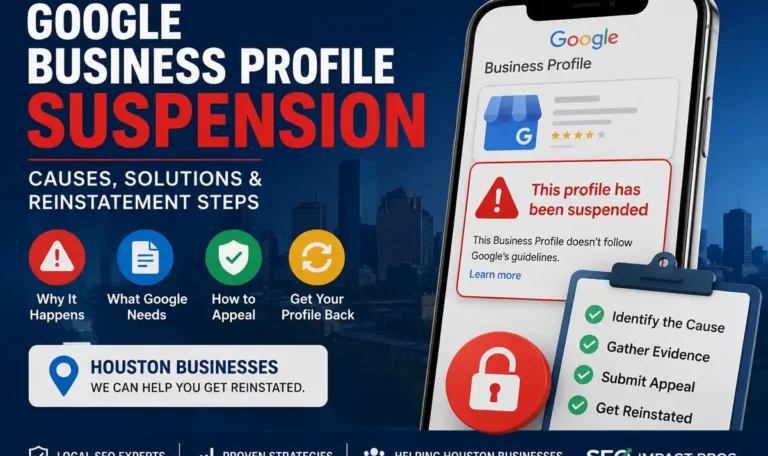
A suspension usually shows up at the worst possible moment: calls slow down, your map visibility disappears, and your team has no clear explanation from Google. For businesses searching for guidance around Google Business Profile Suspended? Here’s What to Do, the fastest path is not panic, but a disciplined review of what changed, what violates policy, and what evidence proves legitimacy. This guide explains how suspensions work, how to identify the trigger, and how Houston businesses can submit a stronger reinstatement request. What a Google Business Profile Suspension Means (And What You Lose) A Google Business Profile suspension means your listing no longer functions normally under Google Business Profile guidelines, even if the business itself is legitimate. In practical terms, “not visible on Google” usually means your profile drops out of Google Maps, the local pack, and branded discovery paths that drive high-intent local SEO traffic. A suspended profile is different from a disabled profile in one important way: suspension usually points to a trust or policy problem with the listing, while a disabled profile may reflect account-level or ownership issues. That distinction matters because the recovery path often requires a reinstatement request tied to business eligibility, not just a login fix. For Houston businesses, the loss is immediate and measurable. You can lose calls, direction requests, website clicks, and review momentum, which means revenue impact often starts before you even identify the cause. Many owners assume suspensions only happen after deceptive content or obvious spam. In reality, we often see legitimate listings suspended after minor edits, especially for a storefront or SAB setup where Google’s systems detect inconsistency faster than a human reviewer would. Soft vs Hard Suspension (Quick Identification) A soft suspension usually means the profile still exists in your dashboard, but visibility or ranking is impaired and ownership controls may be limited. Soft suspension cases often overlap with verification problems, including requests for video verification when Google wants stronger proof of real-world operations. A hard suspension is more severe because the profile is marked suspended or disabled and stops serving as an active local asset. Hard suspension cases typically require an appeal with evidence, and the strength of that evidence often determines whether review moves quickly or stalls. Houston-Specific Reality Check Houston categories such as home services, legal, and medical tend to face stricter automated scrutiny because spam abuse is historically high in those verticals. That means a routine category or name edit for a roofer, attorney, or clinic can trigger review even when the business is real. Service-area businesses also face extra friction in a spread-out metro like Houston. A wide territory, multiple crews, and mixed storefront-plus-service models often create address and service-area configuration mistakes that Google interprets as non-compliance. We’ve also seen suspension cases affect businesses across Houston neighborhoods including The Heights, Memorial, Midtown, Katy, and Sugar Land. While the underlying rules are the same, businesses operating in multiple service areas often encounter profile issues when addresses, service areas, website content, or business documentation do not align consistently. Maintaining accurate information across all business assets helps reduce the risk of triggering Google’s automated review systems. Common Triggers: Why Suspensions Happen (Even If You Didn’t Break Rules) Most suspensions start with a change signal, not a dramatic violation. A business name edit, primary category swap, address update, website URL change, or duplicate listings issue can trigger automated review if the new data no longer matches Google’s trust signals. At SEO Impact Pros, we’ve seen legitimate Houston businesses suspended after changing categories, updating business names, or switching from a storefront to a service-area business setup. In many cases, the suspension was resolved after correcting inconsistencies between the Google Business Profile, website, and business documentation. Rather than focusing on the suspension itself, we first identify what changed and whether that change created a mismatch with Google’s guidelines or trust signals. The most common pattern is mismatch across sources. If your website, signage, business license, citations, and profile fields tell slightly different stories, Google may treat the inconsistency as a reliability problem even when no one intended deception. Policy-sensitive business models get reviewed harder than standard storefronts. Virtual office setups, shared address arrangements, and lead generation style listings often fail because Google wants evidence of a real, eligible business presence rather than a marketing footprint. Edits That Frequently Trigger Automated Reviews Business name changes are a major trigger because keyword stuffing remains one of the most abused tactics in local search. Adding city names, service terms, or promotional words like “best” can move a profile from compliant branding into a deceptive content review. Category changes also matter because they can imply a different business model. If a listing shifts from contractor to locksmith without matching website content, licenses, or service proof, Google may assume the profile no longer represents the same entity. Address and Service-Area Business (SAB) Pitfalls Using a virtual office, coworking space, or UPS mailbox is one of the fastest ways to trigger suspension because those locations rarely satisfy eligibility rules. Google expects a real business presence, and a shared address without dedicated staffing or signage often fails review. If you operate as an SAB, your address should be hidden when customers do not visit a staffed location during published business hours. This rule matters because visible non-customer-facing addresses create a mismatch between how the business operates and how the profile presents it. First 30 Minutes: What to Do Immediately (Before You Appeal) The first mistake most owners make during a Google Business Profile suspension is reacting too fast. Do not submit multiple appeals. Also, avoid changing fields repeatedly. Instability creates conflicting signals and weakens your case. Start by documenting every change from the last 30 to 60 days. Record edits to your name, category, address, phone number, URL, hours, attributes, ownership, and managers. Often, one small adjustment explains a Google Business Profile suspension better than broad speculation. Take screenshots before touching anything else. Save the suspension notice, visible profile information, verification prompts, and your current..

How Many Google Reviews Do You Need to Rank Higher on Google Maps?

If you’re a Houston business owner trying to figure out whether to invest time in review generation or Google Business Profile optimization, you want a real answer—not a generic number. The truth is there is no universal review threshold. Instead, what matters is where you stand relative to your competitors in your specific market and category. While Google Maps reviews play an important role in local rankings, they are only one factor Google considers when determining visibility. Furthermore, businesses that consistently win in local search combine review growth with stronger relevance signals, better profile execution, and smarter content. In other words, reviews are one piece of the puzzle, not the whole board. Therefore, focusing only on review counts while ignoring profile optimization can limit your ability to rank higher on Google Maps. The Short Answer: It Depends on Your Market A plumber in a suburban Houston zip code might compete meaningfully with 25 solid reviews. A personal injury attorney ranking in the Houston metro may need to outperform profiles with hundreds. Category competition sets the bar — Google doesn’t. More important: reviews are only one input inside Google’s local algorithm. Chasing vanity numbers while ignoring category selection, website relevance, and proximity is one of the most common and costly mistakes local businesses make. The practical goal isn’t “get as many reviews as possible.” It’s reach competitive parity, then win on quality and recency. What “Rank Higher” Actually Means on Google Maps Ranking higher can refer to three different surfaces: the Map Pack in standard search results, the Local Pack (often used interchangeably), and the Local Finder that opens when users click “more places.” Results also behave differently inside the Google Maps app, where user location and search intent shape outcomes more aggressively. One searcher two miles from your business may see you in the top three. Another searcher five miles away may not see you at all. Google Maps visibility isn’t a fixed position — it’s a moving set of outcomes influenced by query wording, device, time, and proximity. Why Fewer Reviews Can Still Outrank More Reviews Google Business Profile performance depends on more than raw count. A well-optimized profile with the right primary category, stronger review sentiment, better service relevance, and a closer location can beat a larger but poorly maintained listing. A profile with 60 recent, detailed reviews will often outperform one with 400 stale reviews if the larger profile looks inactive, less relevant, or incomplete. Recency and category fit routinely matter more than total volume. How Google Maps Rankings Work: Relevance, Distance, and Prominence Google consistently describes local rankings through three core factors: Review text also strengthens relevance when customers naturally mention services, neighborhoods, or outcomes. That contextual language gives Google more evidence about what your business does — and when to show it. What Reviews Cannot Fix A strong review profile cannot correct a wrong primary category, missing services, weak website content, or inconsistent NAP (name, address, phone) data across citations. It also cannot fully override proximity for many “near me” searches. Businesses often plateau on reviews and wonder why rankings didn’t move — the problem is usually structural, not numerical. How to Estimate Your Target Review Count The most reliable method is a local competitive analysis. First, search your core keyword and location, review the top Map Pack results, then open the Local Finder and record review counts and star ratings for the top 10 relevant competitors. This approach helps you understand how many Google Maps reviews businesses in your market are earning and what level of competition you face. Next, use the median rather than the average. One dominant competitor with 2,000 reviews can distort an average and push you toward an unrealistic target that does not reflect the actual tier you need to compete in. Additionally, segment your analysis by category and service area. For example, a med spa in the Heights should not benchmark against a family dentist in Sugar Land. Likewise, a service-area business serving suburban Houston should not assume downtown benchmarks apply. As a result, your review goals will be more accurate and achievable. A Simple Formula Collect review counts for the top three Map Pack listings plus the next seven in Local Finder. Find the median. Set a target of roughly 10–30% above that number over the next three to six months — earned ethically and consistently. That puts you inside the competitive tier where other signals (recency, quality, profile strength) can push you ahead. For a deeper look at how Houston’s local search landscape compares, see our guide on Houston Google Maps rankings. Review Quality Signals That Matter More Than Raw Count A business with 120 detailed, recent reviews can outperform one with 500 shallow ones. Google and potential customers both respond to rating distribution, recency, and keyword relevance inside review text — because those signals suggest whether a business is consistentlydelivering value now, not just historically. Review Text and Keyword Reinforcement Ask customers for honest, specific feedback without scripting the answer. Additionally, authentic Google Maps reviews provide more value than generic comments because they help both potential customers and search engines better understand your business. When reviews naturally mention a service, a neighborhood, or a result, they reinforce keyword relevance while remaining fully compliant with Google’s policies. As a result, these detailed reviews can strengthen local visibility and build trust more effectively than coached or repetitive language. What Else Moves the Needle: GBP Optimization Beyond Reviews For most businesses, Google Business Profile fundamentals create larger ranking gains than adding another small batch of reviews. In order of impact: Your website should align with your GBP details. Location pages, service pages, embedded maps, LocalBusiness schema, and internal linking help Google connect your site to your profile — a point reinforced in Google’s own Business Profile Help documentation. To understand how your profile activity connects to inbound calls and lead generation, see our overview of Google Business Profile calls. Review Count vs. Review Quality vs. Profile Optimization Lever Likely Impact Effort Risk Time to Result Profile optimization..

What Happens During the First 90 Days of SEO in Houston?

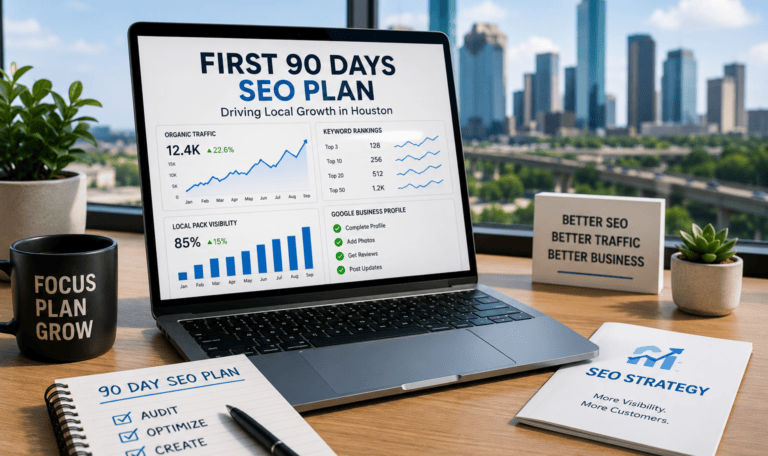
Most Houston businesses don’t “lose” at SEO because they lack effort, they lose because the first 90 days are spent on the wrong work. If you’re expecting instant rankings, the first few months can feel confusing. What actually happens early on is an SEO onboarding process: access, baseline report, technical SEO fixes, local SEO cleanup, and on-page SEO improvements that make Google understand your business and make customers trust it. Why The First 90 Days Of SEO Feel Slow (And Why That’s Normal) SEO is compounding, not instant. In the beginning, the first 90 days SEO process is mostly about building a foundation that prevents future growth from leaking through technical problems and unclear pages. A lot of early wins come from removing friction, not “publishing more.” Fixing crawlability, indexation, internal linking, and trust signals often beats pushing out generic blog posts. Google also tests changes before it settles. Between days 30 and 90, it’s normal to see rankings bounce around as Google re-crawls pages, re-evaluates relevance, and compares your pages to other Houston competitors in the SERP. Early progress rarely looks like “we’re #1.” It looks like: For local businesses, the goal early is clarity and trust, not volume blogging. When your service pages, NAP consistency, citations, and Google reviews line up, you look like a real, reliable company, and that’s what Google wants to rank. What You Can Realistically Measure In The First 30–90 Days You can measure real progress early, but you have to focus on the right KPIs. Rankings alone will mess with your head in month one. Start with baseline KPIs that connect to visibility and leads: Then track leading indicators that show your SEO is getting healthier: If you need a refresher on the basics, this breakdown of the core concepts behind search optimization is a good starting point: https://seoimpactpros.com/what-is-seo/. Common Misread Signals That Cause Panic Changes Some “bad” signals are normal side effects of making improvements during the first 90 days SEO process. The biggest mistake is reacting too fast and resetting progress. Common examples: here Constant rewrites slow everything down. If you change titles, headings, page sections, and internal links every week, Google never sees a stable version long enough to evaluate. Days 1–7: Discovery, Access, And A Clean Baseline Week one is about getting access, getting organized, and avoiding blind changes. You can’t improve what you can’t measure. The first step is collecting access to the platforms that control your data and visibility: Before you touch the site, document what’s working. Save your top converting pages, your best queries, and your current local pack presence so you don’t accidentally “fix” the parts that already bring in leads. For Houston businesses, priorities should be tied to revenue and service reality. That means service areas, your highest-margin services, seasonality (AC repair spikes, storm cleanup, holiday plumbing calls), and the kind of leads you actually want. Then build a simple 30-60-90-day plan with ruthless prioritization. Use impact vs effort, not “what sounds impressive.” Stakeholder Inputs You Need (Even If You’re A One-Person Team) Even if you run the business yourself, you still need to answer a few questions before keyword research or content strategy. Get these nailed down: This matters because SEO that drives the wrong leads is still a failure. Lead quality is a real KPI, even if it lives in a simple spreadsheet. Baseline Snapshot Checklist A baseline report is your “before” picture. It helps you prove progress even when rankings wobble. Capture these items: Days 8–30: Technical And Trust Fixes That Unlock Early Gains During the first 90 days SEO timeline, days 8–30 are usually where quick wins start showing up. Not because Google suddenly loves your site, but because you remove the problems that were holding it back. Start with an SEO audit that focuses on crawl and indexation blockers, along with conversion-killing UX problems. In many cases, a content audit also helps because thin or duplicated pages can drag down quality signals. High-impact fixes to prioritize first: Trust is not optional for local SEO. Strengthen “real business” signals that both Google and customers look for: Page speed and Core Web Vitals matter most when they’re actually limiting performance. If your site is painfully slow on mobile, fix it, but don’t obsess over perfect scores if you’re already loading quickly enough for real users. For Google’s own guidance on technical fundamentals, Google Search Central’s documentation is the most reliable reference: https://developers.google.com/search/docs. Technical SEO Priorities For Local Sites Local sites often have fewer pages, which is a good thing. It means you can get the basics right faster. Focus on: If you use call tracking, set it up carefully so it doesn’t break attribution. Dynamic number insertion is useful, but you still want your primary NAP to remain consistent for citations and local trust. On-Site Trust Signals Google And Customers Notice A vague site is hard to rank and hard to buy from. A clear site earns trust faster. Make sure you have: Structured data can also help you stand out and reduce confusion. For some businesses, FAQPage schema and HowTo schema can support rich results when used correctly, but only add it when the page truly contains that content. Days 31–60: Keyword Research, Site Structure, And On-Page Execution By month two of the first 90 days SEO process, strategy usually becomes visible on the website. This is when keyword research, site architecture, and content optimization begin working together. The goal is simple: map one primary intent per page. If two pages target the same intent, you risk keyword cannibalization, and Google may not rank either page well. For many Houston service businesses, a clean site architecture usually looks like: Then tighten on-page SEO elements for clarity: Your content strategy should be built from real calls and estimates. If customers keep asking “Do you service Katy?” or “How long does this take?” those belong on the page. How To Prioritize Keywords When You Don’t Have A Big Budget You don’t need 500..

Choosing an SEO Company in Houston Without Getting Burned

A lot of Houston business owners hire an SEO agency after a strong sales call, then spend six months staring at reports that never turn into calls or sales. For anyone trying to understand How to Choose an SEO Company Without Getting Burned, the real issue is not finding flashy promises but reducing risk before a contract is signed. This guide explains what usually goes wrong, what good SEO actually looks like, which questions expose weak agencies fast, and how to protect your budget, data, and website. Why SEO Hiring Goes Wrong in Houston SEO is hard to judge upfront because results are delayed, tactics are often hidden, and the Google SERP changes constantly. That mix makes weak agencies look credible long before their work can be measured. Houston makes that problem worse because local competition is serious in legal, medical, HVAC, dental, hospitality, and multi-location service brands. In crowded markets, bad on-page SEO, weak review management, or sloppy anchor text choices do not just slow growth, they bury a business behind better-run competitors. The safest goal is not finding a magic agency. The goal is aligning strategy, proof, process, reporting, and contract terms so a bad fit becomes obvious early. One useful benchmark is whether an agency starts with your business model or starts with tactics. If the first pitch is backlinks, rankings, or AI content before they discuss revenue drivers, they are probably selling a package instead of solving a growth problem. The Most Common “Burned by SEO” Pattern The usual pattern is simple: the agency jumps into backlinks, blog volume, or generic optimization before learning what actually produces revenue. That creates activity without direction, and activity is easy to mistake for progress until an algorithm update exposes how weak the foundation was. Business owners often approve work because the reports look busy. If those reports do not connect SEO changes to calls, booked jobs, or sales, the agency may be optimizing for appearances rather than outcomes. What “Good SEO” Looks Like for Houston Businesses Good SEO produces measurable business results such as qualified leads, booked appointments, direction requests, phone calls, and stronger ROI. Traffic matters only when it comes from the right searchers and lands on pages built to convert. For Houston companies, strong local visibility usually includes map pack performance, accurate service-area pages, and review signals that support trust. A local campaign that ranks broad informational terms but misses neighborhood and service intent will rarely produce the same commercial value. Step 1: Define Success Before You Talk to Any Agency Before any sales call, decide what the business actually needs SEO to do. An ecommerce store, a lead generation firm, a multi-location brand, and a niche law practice need different technical SEO, content strategy, and digital PR priorities. Pick two to four KPIs tied to revenue, not vanity. Common examples include calls, form fills, booked consults, purchases, qualified leads, and CRM-tracked opportunities. Then define scope. Some businesses need a full SEO audit plus technical cleanup, while others need local SEO, conversion-focused page rewrites, or authority building through digital PR. Constraints matter too. Budget, internal approval speed, CMS limits, and compliance rules in legal or medical industries can shape the plan more than keyword volume ever will. Your Houston Service Area and Target Customers A Houston company should define where it actually wants customers from, including neighborhoods, suburbs, and service radii. Clear service-area targeting prevents wasted effort on random traffic from places your team will not serve profitably. Document your top services and highest-margin jobs before keyword research starts. That step improves attribution later because the agency can map traffic and leads to the offers that matter most. Baseline Checklist to Capture Before Hiring Capture current rankings, organic traffic, conversions, and Google Business Profile trends before work begins. If GA4 is misconfigured at the start, every later performance claim becomes harder to trust. Also document current issues such as Google penalties, indexation problems, poor page speed, duplicate pages, thin content, and tracking gaps. Tools like PageSpeed Insights can surface technical friction quickly, but the value comes from tying those findings to revenue impact. Step 2: Validate Proof the Right Way Pretty case studies are easy to manufacture because they usually hide the starting point, the timeline, and what actually changed. Real proof is verifiable evidence such as Search Console screenshots, call tracking trends, before-and-after pages, and citation improvements tied to local visibility. Relevance matters as much as results. A win for a national SaaS brand tells you very little about whether the agency can help a Houston dentist, lawyer, or home service company compete locally. Ask them to explain causality in plain English. If they cannot say what they changed, why it mattered, and how long it took, they may not understand their own results well enough to repeat them. What to Request in a Proof Packet Ask for three page examples that show how they improved structure, intent match, internal links, schema markup, and trust signals. A useful proof packet should also show whether they used tools like Screaming Frog to diagnose crawl issues instead of guessing. Request a sample monthly report too. It should show KPIs, actions taken, outcomes, and next steps, not just charts with no decision-making context. How to Check References Without Getting a Scripted Answer When speaking with current or former clients, ask what happened in the first 60 days, what changed on the site, and what they wish had been handled differently. Those questions usually produce more honest answers than asking whether they were “happy.” Check review patterns and business legitimacy across platforms as well. A company with suspiciously vague reviews or inconsistent business details may be better at sales than delivery. Step 3: Understand Exactly What They’re Selling Many agencies blur the line between deliverables and outcomes. Audits, blog posts, link outreach, and technical fixes are inputs, while leads, revenue, and lead quality are outcomes. That distinction matters because one-size-fits-all packages often ignore your site architecture, local competitors, and..

What Does an SEO Company Actually Do?

What does an SEO company actually do, and how does it impact your business growth in Houston, TX? Understanding what an SEO company actually does starts with clear deliverables. You need to know what happens in the first 30 days. You also need to understand how leads are tracked back to pages and keywords. A professional SEO company improves search visibility. It helps attract qualified traffic. It also increases the chances that demand turns into measurable lead generation. In Houston, TX, a strong SEO strategy combines technical SEO, on-page SEO, keyword research, and content optimization. These elements help your website perform better in the SERP. A Houston SEO company should improve how often nearby customers find your business. It should also ensure your SEO services match real search intent. In addition, it should improve how efficiently your site converts traffic into calls, forms, and booked appointments. What Outcomes a Houston SEO Company Should Be Accountable For Understanding what an SEO company actually does starts with outcomes you can measure, not vague promises. A strong SEO company improves search visibility. It also strengthens local SEO rankings. In addition, it drives qualified lead generation that you can track back to specific pages, keywords, and locations in Houston, TX. At the same time, a Houston SEO company should improve how your business appears across organic results and the local pack. It should increase how often nearby buyers find you. It should also improve how effectively your website converts traffic into calls, form submissions, direction requests, and appointments. Request a Free SEO Consultation or get a Free SEO Audit to pinpoint where rankings, traffic, and leads are being lost. Then, receive a prioritized fix list and a clear next-step roadmap based on your site and Houston search results. Trust Bar (Credibility Signals) To support consistent performance, a professional SEO company in Houston uses proven tools, repeatable processes, and senior review. In addition, these SEO services are structured to improve search visibility, local SEO performance, and long-term lead generation, including: For additional best practices and definitions, you can reference the federal SEO guidance to better understand how search engines evaluate websites. SEO Services Overview (What an SEO Company Does Day-to-Day) Technical SEO: We fix crawlability and improve indexing, redirects, 404 errors, page speed, schema markup, and Core Web Vitals so Google can reliably access, understand, and rank the right pages. Local SEO: We optimize your Google Business Profile and improve local pack visibility through citations, NAP consistency, reviews management, and service area pages that match proximity-driven searches in Houston, TX. On-Page SEO: We refine title tags, meta descriptions, heading structure, internal linking, and content optimization so each page aligns with search intent, improves E-E-A-T signals, and earns better click-through rates. Content Strategy and Writing: We build a content strategy from keyword research, competitor analysis, and search intent mapping, then create content writing and content optimization plans around revenue-focused topics that build topical authority and strengthen service-page performance. If you want a deeper breakdown of how content supports rankings and lead generation, see our content marketing in Houston guide. Link Building and Digital PR: We earn relevant backlinks through ethical SEO, local outreach, and digital PR, with quality standards designed to avoid spam tactics that can increase penalty risk. SEO Reporting and Analytics: We connect rank tracking, conversion tracking, and call tracking with Google Analytics 4 and Google Search Console, then report on what moved, why it moved, and what we are doing next. Want to see everything included in our Houston deliverables? Explore our SEO services in Houston page. Request a Free Consultation to see which SEO services matter most for your site first and which can wait. What You Actually Get Each Month (Deliverables, Not Vibes) Most business owners do not need a long list of SEO tasks, they need clarity on what will be done, why it matters, and how it ties to leads. Here are common deliverables a professional SEO company provides for Houston businesses: If an SEO company cannot explain their deliverables in plain language, it is usually a sign the strategy is not tied to measurable business outcomes. Why Choose Our Houston SEO Team Transparent deliverables: You get a clear monthly plan (tasks, owners, timelines) tied to rankings and leads. Local-first strategy: We prioritize Houston search behavior, neighborhoods, and competition, not generic national playbooks. Technical + content together: Fix the foundation and publish what Google wants to rank, so growth is durable through Google algorithm updates. Reporting you can understand: KPIs focus on calls, forms, revenue pages, and visibility, not vanity metrics. Ethical SEO: No spam links or risky shortcuts that can trigger penalties. Conversion-minded: We optimize pages to turn traffic into booked calls, quote requests, and store visits, not just higher rankings. Talk to an SEO Strategist at SEO Impact Pros if you want a plan that explains execution, timelines, and ROI. Results and Social Proof (Scannable, Not Salesy) As a result, a professional SEO company in Houston focuses on measurable outcomes, not just rankings. In most cases, SEO services follow a structured timeline. Performance improves as technical SEO, content optimization, and local SEO work together. Strategy inputs include competitor analysis, search intent mapping, conversion rate optimization, and internal linking improvements. Together, these elements support stronger SEO services performance. Early impact often comes from technical SEO, on-page SEO, and local SEO fixes within the first 30 to 90 days; however, timing varies based on competition, your starting point, and how quickly changes are implemented. Over time, content strategy, link building, off-page SEO, and digital PR compound, therefore strengthening authority and long-term rankings. KPIs tracked include organic sessions, keyword visibility, local pack rankings, conversions, and phone calls, so performance is tied to real business outcomes. Lead actions tracked include calls, forms, direction requests, and booked appointments, which directly support lead generation goals. Tools commonly used include Google Analytics 4, Google Search Console, and Screaming Frog, allowing accurate tracking and reporting. Deliverables typically include an SEO audit summary, content roadmap, technical backlog, and monthly performance..